
If you want to buy gray iron castings from a manufacturer, choosing the right foundry is important for achieving consistent material quality, accurate dimensions, reliable machining, and repeatable production.
Gray iron is one of the most widely used cast iron materials for industrial machinery, automotive components, pumps, valves, agricultural equipment, motor housings, gearboxes, and machine bases. Its combination of good castability, excellent machinability, vibration damping, thermal conductivity, and cost efficiency makes it suitable for a wide range of engineered components.
However, buying a casting isn’t simply a matter of selecting a material and requesting a price. The final component depends on pattern design, mold quality, chemical composition, melting control, inoculation, solidification, fettling, machining, and inspection.
For OEM buyers, working directly with a gray iron casting manufacturer can provide better control over these manufacturing stages.
This guide explains what gray iron castings are, where they’re used, how they’re manufactured, what to check before buying, and how to choose the right manufacturer for your project.
What Are Gray Iron Castings?
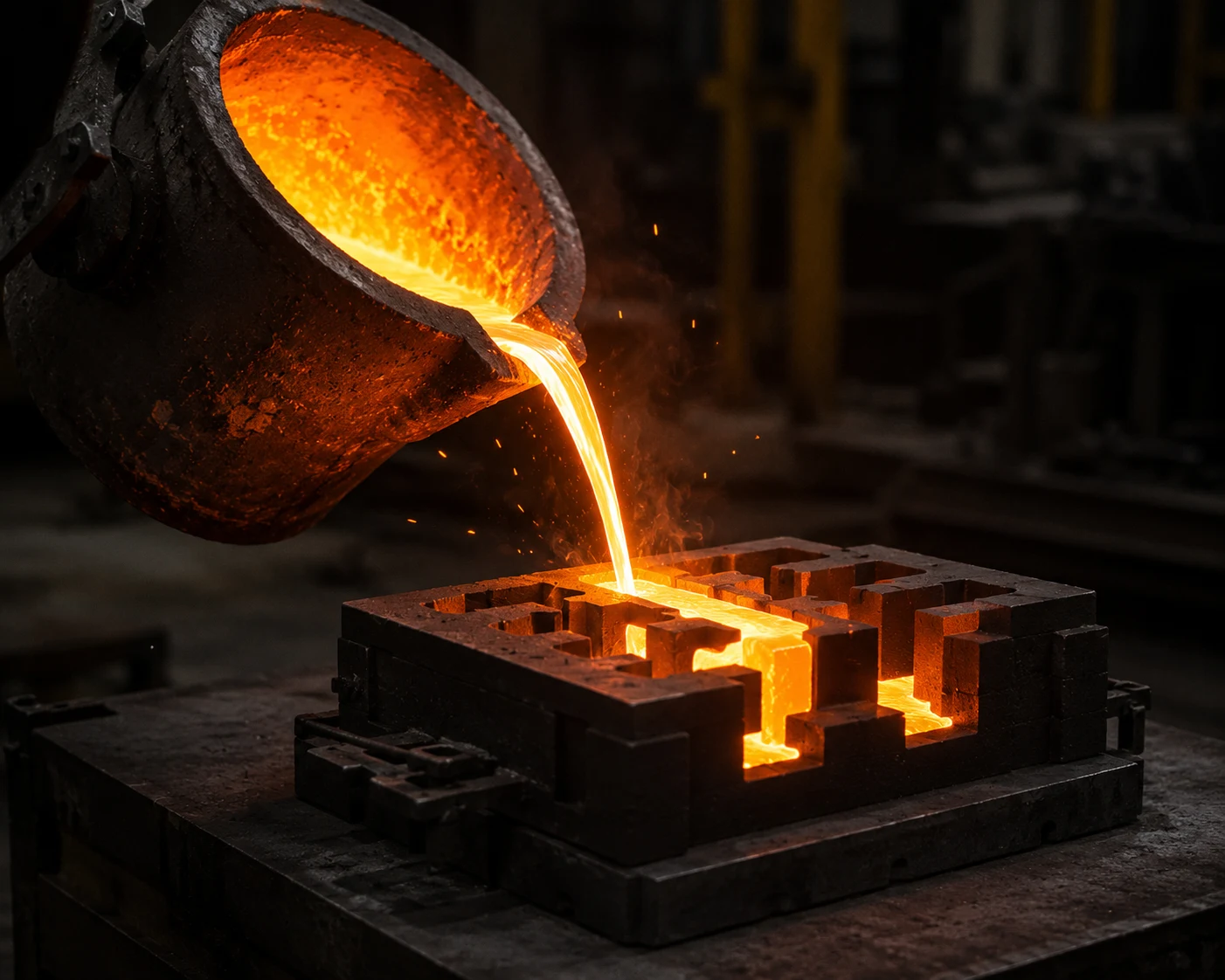
Gray iron is a cast iron material in which graphite is present primarily in the form of flakes within an iron matrix.
The graphite flakes give gray iron its characteristic appearance when fractured. They also contribute to some of its most useful engineering properties, particularly machinability and vibration damping.
Gray iron can provide:
- Excellent machinability
- Good castability
- Good vibration damping
- Good thermal conductivity
- Good compressive strength
- Good wear resistance in suitable applications
- Cost-effective production
ASTM A48/A48M is one commonly used specification for gray iron castings. It classifies gray iron primarily according to tensile strength.
The appropriate grade should always be selected according to the component’s design and service requirements.
Why Buy Gray Iron Castings Directly from a Manufacturer?
Buying directly from a manufacturer can be useful for OEMs, engineering companies, machinery manufacturers, and industrial buyers that need repeat production.
Custom Manufacturing
A manufacturer can produce castings according to:
- Engineering drawings
- CAD models
- Physical samples
- Material specifications
- Dimensional tolerances
- Machining requirements
This makes direct manufacturing suitable for components that aren’t available as standard products.
Better Material Control
A foundry can control the chemical composition and metallurgical condition of the melt according to the required grade.
This is important when mechanical properties and machining behavior need to remain consistent between production batches.
Engineering Support
Experienced casting manufacturers can review the component design before tooling is produced.
They can evaluate:
- Wall thickness
- Draft
- Core design
- Machining allowance
- Shrinkage allowance
- Gating
- Risering
Early engineering review can help prevent costly casting problems later.
Production Consistency
For OEM applications, the objective isn’t just to produce one acceptable casting. The manufacturer needs to reproduce the component consistently over multiple production batches.
Common Applications of Gray Iron Castings
Gray iron is used across a wide range of industries because of its combination of machinability, damping, castability, and cost.
Automotive Components
Gray iron can be used for selected automotive components such as:
- Brake components
- Engine-related components
- Flywheel housings
- Gear housings
- Covers
- Brackets
The material grade must be matched to the specific application.
Pump Components
Gray iron is commonly considered for:
- Pump bodies
- Pump casings
- Covers
- Housings
- Flanges
- Bearing housings
Valve Components
Applications can include:
- Valve bodies
- Covers
- Bonnet components
- Flanges
- Housings
Agricultural Machinery
Gray iron castings can be used in:
- Tractor components
- Gear housings
- Transmission housings
- Machinery brackets
- Agricultural equipment housings
Industrial Machinery
Other applications include:
- Machine bases
- Motor housings
- Gearbox housings
- Compressor components
- Bearing housings
- Industrial equipment bodies
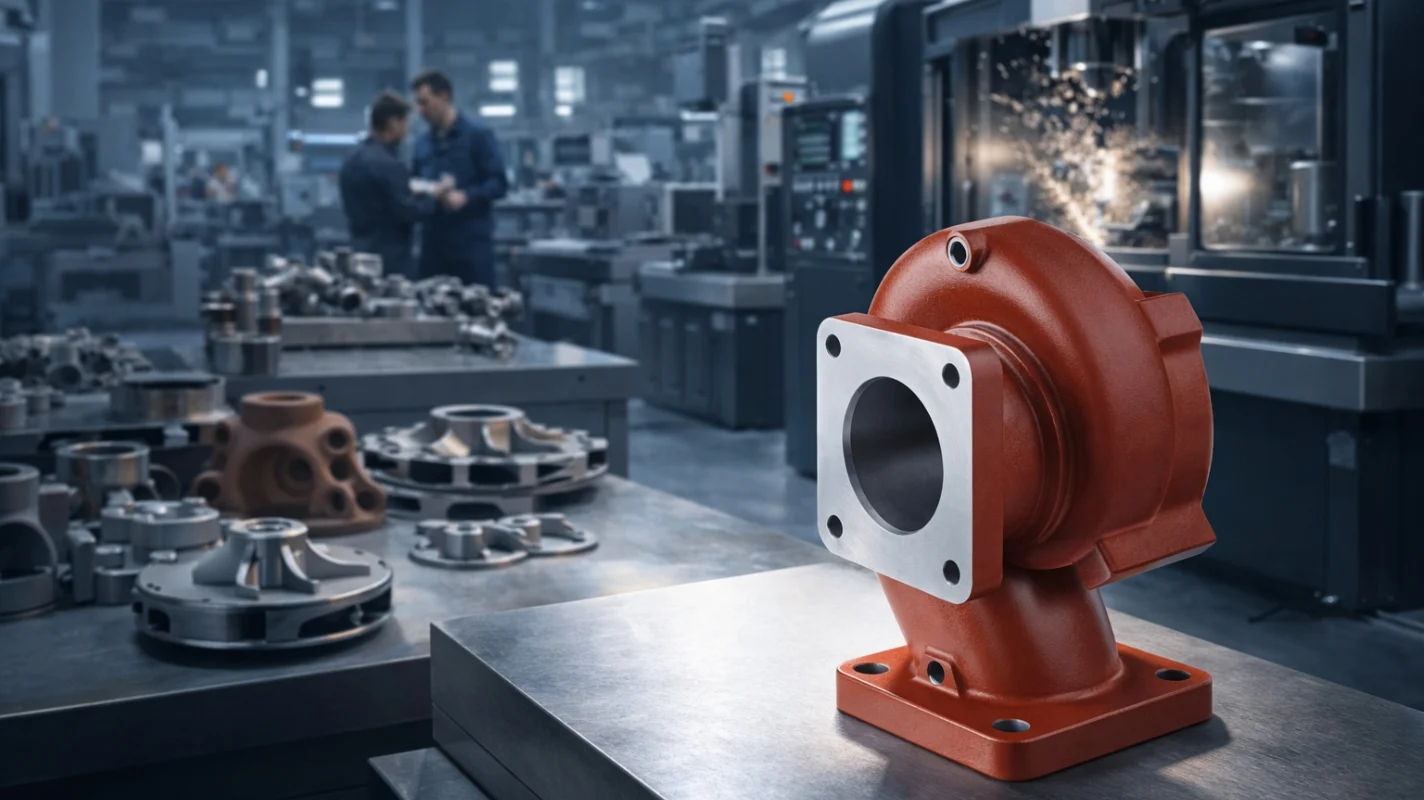
Gray Iron Casting Manufacturing Process
A reliable gray iron casting manufacturer needs controlled processes from engineering through final inspection.
1. Casting Design
Production begins with an engineering drawing, CAD model, or approved sample.
The foundry evaluates the geometry and determines how the component should be molded and cast.
Important considerations include:
- Wall thickness
- Draft angles
- Core requirements
- Machining allowance
- Shrinkage allowance
- Gating design
- Riser design
Good casting design helps reduce defects and unnecessary machining.
2. Pattern and Core Development
A pattern is used to create the mold cavity.
If the component contains internal passages, cores are used to create those features.
Pattern and core accuracy directly affect the dimensional quality of the finished casting.
3. Melting
The selected charge materials are melted in a suitable furnace, commonly an induction furnace.
The foundry monitors:
- Chemical composition
- Melt temperature
- Carbon equivalent
- Alloy additions
- Process consistency
Spectrometric analysis can be used to verify the chemical composition.
4. Inoculation
Inoculation is an important part of gray iron production.
It influences graphite formation and can help achieve the desired microstructure and properties.
The treatment must be controlled according to the required grade and foundry process.
5. Molding and Pouring
The molten iron is poured into prepared molds through the designed gating system.
The mold must fill properly while the feeding system provides sufficient molten metal during solidification.
Poor gating or risering can contribute to defects such as shrinkage, inclusions, cold shuts, and incomplete filling.
6. Cooling and Shakeout
After pouring, the casting is allowed to solidify and cool.
It is then removed from the mold during shakeout.
7. Fettling and Cleaning
The casting is cleaned and excess material such as gates, runners, and risers is removed.
Shot blasting or other cleaning methods may be used to prepare the surface for inspection and machining.
8. Machining
Depending on the customer’s requirements, the casting may be supplied as-cast or machined.
CNC machining can produce:
- Accurate bores
- Mounting faces
- Holes
- Threads
- Sealing surfaces
- Bearing locations
For OEM production, machining tolerances should be defined on the engineering drawing.
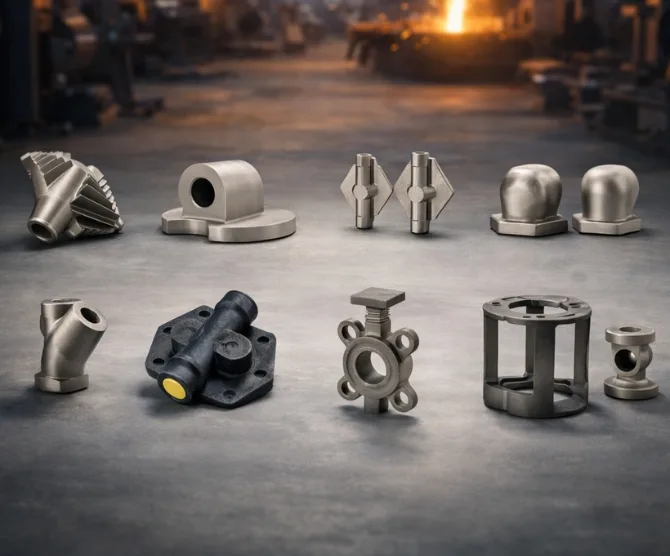
What Quality Checks Should You Expect?
Before you buy gray iron castings from a manufacturer, ask how the supplier controls quality.
Chemical Composition
The manufacturer should be able to verify the chemical composition against the specified material grade.
Mechanical Properties
Depending on the applicable specification, testing can include:
- Tensile strength
- Hardness
- Other specified mechanical properties
Metallurgical Inspection
Microstructure examination can help verify graphite morphology and the metal matrix.
For critical applications, the required metallurgical criteria should be established in the purchasing specification.
Dimensional Inspection
Critical casting and machined dimensions should be checked against the approved drawing.
For complex components, CMM inspection may be used.
Surface Inspection
The manufacturer should inspect the casting for visible defects such as:
- Cracks
- Cold shuts
- Sand inclusions
- Excessive surface roughness
- Misruns
- Surface porosity
Non-Destructive Testing
Where required by the application, additional inspection may include magnetic particle, ultrasonic, radiographic, or other appropriate NDT methods.
The inspection method should be selected based on the component, material, risk, and customer requirements.
How to Choose a Gray Iron Casting Manufacturer
Not every foundry is equipped to produce the same type of component.
Before placing an order, evaluate the supplier across several areas.
Foundry Capacity
Check whether the manufacturer can handle your component’s:
- Size
- Weight
- Geometry
- Annual production volume
Material Capability
Confirm which gray iron grades the foundry can produce and what standards it follows.
Tooling Capability
Ask whether pattern and core-box development are handled internally or through external suppliers.
Machining Capability
If you need finished components, determine whether the manufacturer has suitable CNC machining capacity.
Quality Control
Ask about:
- Chemical analysis
- Mechanical testing
- Metallography
- Dimensional inspection
- NDT
- Traceability
OEM Experience
For custom components, experience with OEM drawings, samples, tooling, inspection requirements, and repeat production can be valuable.
Custom Gray Iron Castings for OEM Applications
OEM buyers often need castings that aren’t standard catalog products.
A custom project may begin with a CAD model or engineering drawing and progress through:
Design Review → Tooling → Prototype → Casting → Machining → Inspection → Production
The manufacturer should review the design before tooling begins.
For example, a wall section that is too thick may increase the risk of shrinkage. An unsuitable core design may make molding difficult. Insufficient machining allowance can create problems during final machining.
Resolving these issues during engineering review is usually easier than correcting them after production begins.
As-Cast vs Machined Gray Iron Castings
When purchasing gray iron castings, buyers should clearly specify whether the component should be supplied as-cast or machined.
As-Cast Components
These are cleaned and inspected after casting but aren’t fully machined.
They’re suitable when the buyer has its own machining operation.
Machined Castings
These undergo additional machining to meet specified dimensional tolerances.
Machined supply can be useful when the buyer wants a more finished component ready for assembly or further processing.
The quotation should clearly separate casting, machining, tooling, inspection, and packaging requirements.
Gray Iron Casting Cost Factors
The price of a gray iron casting depends on several factors.
Important cost drivers include:
- Casting weight
- Material grade
- Component complexity
- Pattern cost
- Core requirements
- Production volume
- Machining requirements
- Inspection requirements
- Heat treatment if applicable
- Packaging
- Shipping
A lower casting price isn’t necessarily the lowest total cost.
For OEM procurement, consider the complete cost of casting, machining, rejection, inspection, logistics, and repeat production.
What Information Should You Send for a Quotation?
To buy gray iron casting from a manufacturer, provide detailed technical information whenever possible.
A quotation package should ideally include:
- 2D engineering drawing
- 3D CAD model
- Material grade
- Component weight
- Annual quantity
- Order quantity
- Dimensional tolerances
- Machining requirements
- Surface finish requirements
- Inspection requirements
- Applicable standards
- Packaging requirements
- Delivery location
The more complete the information, the more accurately the manufacturer can estimate tooling, casting, machining, inspection, and logistics costs.
Why Choose RAIMAC Technocast?
RAIMAC Technocast provides custom iron casting solutions for OEM and industrial requirements.
Its capabilities can support projects involving:
- Gray iron castings
- SG / ductile iron castings
- Automotive components
- Tractor components
- Pump castings
- Valve components
- Industrial machinery parts
- Custom OEM castings
- Precision-machined components
For each project, the material specification, casting design, production volume, machining requirements, and inspection criteria should be established before production.
This helps ensure the finished casting is manufactured according to the engineering requirements of the application.
Buy Gray Iron Castings for Export
International buyers should also evaluate the supplier’s ability to prepare castings for export.
Important considerations include:
- Export packaging
- Rust prevention
- Surface protection
- Palletization
- Product identification
- Packing lists
- Commercial documentation
- Traceability
Machined surfaces and precision features should receive suitable protection during storage and transportation.
For repeat international orders, consistent packaging and product identification can help simplify receiving and quality inspection.
Frequently Asked Questions
You can purchase gray iron castings directly from a qualified gray iron foundry or manufacturer that can meet your required material grade, dimensions, production quantity, machining, and inspection specifications.
Gray iron is commonly used for machine bases, housings, pump bodies, valve components, automotive parts, motor housings, gearboxes, agricultural machinery, and other industrial components.
Gray iron provides good compressive strength and useful mechanical properties, but its tensile ductility is lower than ductile iron because of its flake graphite structure. The appropriate grade should be selected based on the component's service requirements.
Yes. Gray iron generally has excellent machinability and can be CNC milled, drilled, bored, turned, and threaded according to the component design.
A drawing or CAD model, material grade, casting weight, quantity, tolerances, machining requirements, inspection requirements, and delivery location are useful for preparing an accurate quotation.
Yes. Manufacturers can produce custom castings from engineering drawings, CAD files, samples, and specified material requirements.
Conclusion
When you buy gray iron castings from a manufacturer, the goal should be more than obtaining a competitive quotation. The supplier should be able to consistently control material composition, mold quality, casting design, solidification, cleaning, machining, and inspection.
Gray iron remains an important engineering material because it offers a practical combination of castability, machinability, vibration damping, thermal performance, and cost efficiency.
For OEM and industrial applications, the right manufacturer can support the complete process from pattern development and casting through CNC machining, inspection, packaging, and repeat production.
If you have a drawing, CAD model, sample, or existing gray iron component, RAIMAC Technocast can evaluate the casting requirements and develop a manufacturing solution based on the required material grade, dimensions, quantity, machining, and inspection specifications.