SG / Ductile Iron Castings
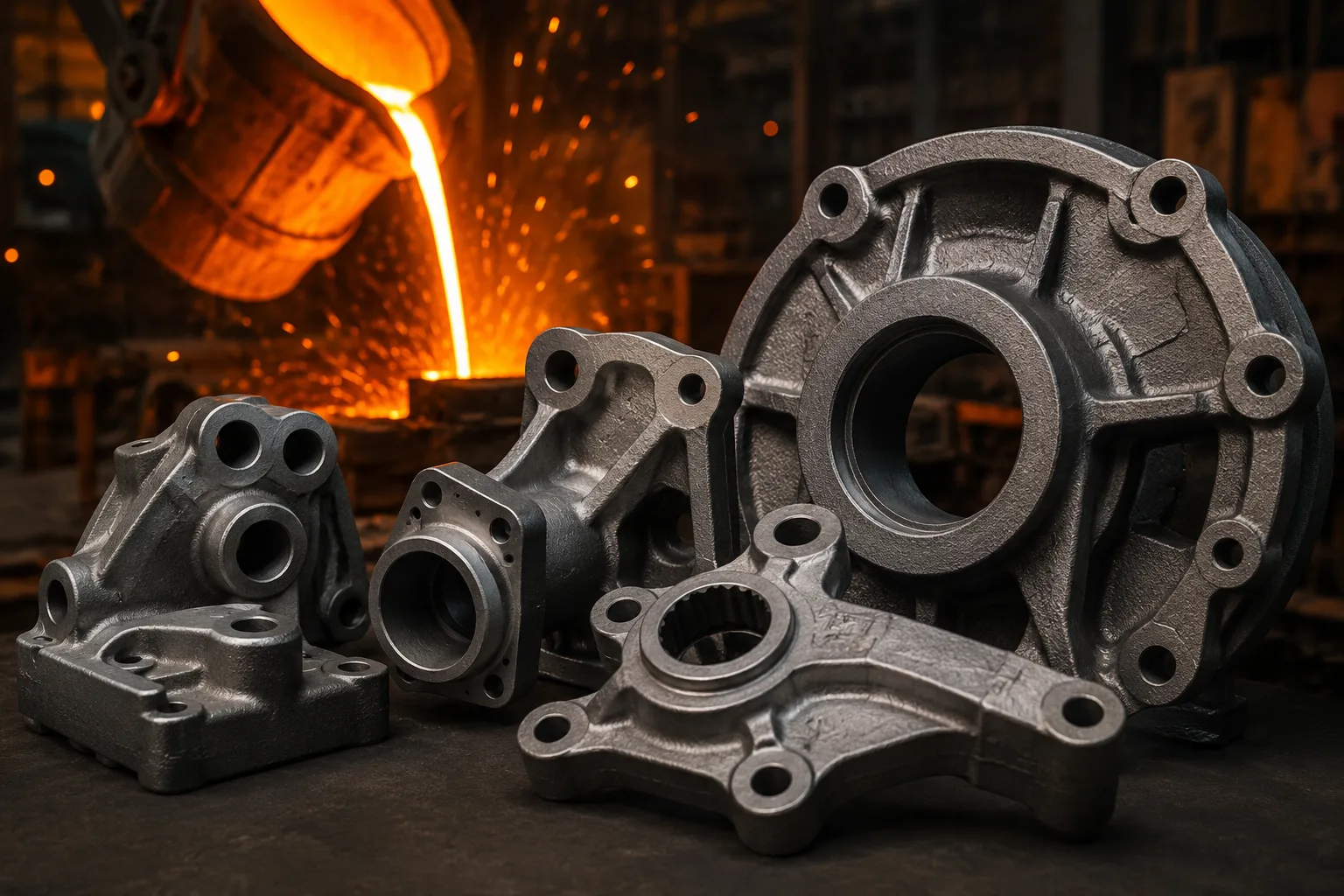
Every industry that depends on heavy machinery shares one common requirement: components must be strong, durable, and capable of performing under continuous mechanical stress. Whether it’s agricultural tractors, construction equipment, mining machinery, automotive systems, or industrial pumps, the reliability of each machine begins with the quality of its cast components. This is why SG / Ductile Iron Castings have become one of the most trusted engineering materials in modern manufacturing.
Unlike conventional grey cast iron, SG (Spheroidal Graphite) or ductile iron is engineered to combine the castability of iron with mechanical properties that closely resemble steel. Its unique graphite structure provides exceptional tensile strength, superior ductility, excellent wear resistance, and outstanding fatigue performance, making it the preferred material for components that experience heavy loads, impact, and vibration.
Today, manufacturers, OEMs, and industrial buyers worldwide rely on SG / Ductile Iron Castings for critical applications because they offer an ideal balance of performance, machinability, and cost efficiency. From precision machined automotive parts to large industrial housings and agricultural machinery, ductile iron continues to outperform many traditional casting materials.
This guide explains everything you need to know about SG / Ductile Iron Castings, including how they are manufactured, why density matters, common material grades, industrial applications, and how to choose the right ductile iron casting manufacturer for long-term success.
What Are SG / Ductile Iron Castings?
SG / Ductile Iron Castings, also known as Spheroidal Graphite Iron, Nodular Cast Iron, or Ductile Cast Iron, are cast components produced by modifying molten iron so that the graphite forms as tiny spherical nodules instead of flakes.
This microscopic change completely transforms the material’s mechanical properties.
In grey cast iron, graphite appears as sharp flakes that interrupt the metal matrix and create stress concentration points. Under heavy loading, these flakes can initiate cracks, making the material relatively brittle.
In SG iron, graphite exists as rounded nodules. Because these nodules distribute stress more evenly throughout the casting, the material becomes significantly stronger, tougher, and more resistant to fatigue.
Although invisible to the naked eye, this difference in graphite morphology is the primary reason why SG iron is widely selected for high-performance engineering applications.
The result is a material that offers:
- High tensile strength
- Excellent ductility
- Superior impact resistance
- Outstanding fatigue life
- Good machinability
- Excellent wear resistance
- High pressure resistance
- Long service life
These advantages make SG iron suitable for both safety-critical and heavy-duty industrial components.
Why Was SG Iron Developed?
Before ductile iron was introduced, grey cast iron was the most widely used casting material because it was economical, easy to cast, and offered excellent vibration damping. However, it had one significant limitation: brittleness.
As industrial equipment became more powerful and complex, engineers required a material that could absorb higher mechanical loads without cracking. Components such as crankshafts, axle housings, hydraulic bodies, steering knuckles, and gear housings demanded greater toughness while maintaining the production advantages of cast iron.
The breakthrough came in the late 1940s when researchers discovered that adding a controlled amount of magnesium to molten iron changed the shape of graphite during solidification. Instead of forming flakes, the graphite solidified into spherical nodules.
This innovation created what is now known as ductile iron or SG iron.
Today, SG / Ductile Iron Castings bridge the gap between grey iron and cast steel. They provide many of the strength characteristics of steel while retaining the casting efficiency, vibration damping, and machining advantages of cast iron.
Why Industries Prefer SG / Ductile Iron Castings
Modern manufacturers select materials based on more than strength alone. Cost, machinability, service life, maintenance requirements, and manufacturing efficiency all influence material selection.
SG iron delivers an excellent balance across these factors.
Exceptional Mechanical Strength
Depending on the selected grade, ductile iron can achieve tensile strengths ranging from approximately 400 MPa to more than 700 MPa. This allows components to withstand substantial static and dynamic loads without permanent deformation.
Superior Ductility
Unlike grey cast iron, ductile iron can deform before failure. This ability to absorb energy makes it ideal for components exposed to vibration, shock loading, and cyclic stress.
Excellent Fatigue Resistance
Many industrial components fail not because of a single overload, but because of repeated loading over time. The nodular graphite structure significantly improves fatigue life, reducing the likelihood of premature failure.
Outstanding Wear Resistance
SG iron performs exceptionally well in applications involving friction, making it a preferred material for gears, pump bodies, housings, and machinery operating under abrasive conditions.
Good Machinability
Although considerably stronger than grey iron, ductile iron can still be machined efficiently using CNC equipment. This helps manufacturers achieve tight tolerances while controlling production costs.
Cost-Effective Alternative to Cast Steel
For many engineering applications, SG iron delivers comparable mechanical performance at a lower manufacturing cost than cast steel, making it an economical solution for high-volume production.
SG Cast Iron Density Explained
Material density plays a crucial role in engineering design because it directly influences component weight, structural performance, machining requirements, and transportation costs.
The typical SG cast iron density ranges from 7.0 to 7.3 g/cm³, depending on the chemical composition, graphite content, and specific material grade.
Engineers use density to calculate:
- Component weight
- Material consumption
- Structural loading
- Shipping weight
- Machining allowances
- Manufacturing costs
While the density difference between grey iron and ductile iron is relatively small, the improvement in mechanical performance is significant. This allows designers to optimize component geometry without sacrificing structural integrity.
For OEM manufacturers producing high-volume industrial equipment, understanding SG cast iron density helps improve both product performance and production efficiency.
How SG / Ductile Iron Castings Are Manufactured
The performance of ductile iron begins long before the casting is poured. Every stage of production influences the final microstructure, mechanical properties, and dimensional accuracy of the finished component.
A professional ductile iron foundry follows a tightly controlled manufacturing process to ensure repeatable quality across every production batch.
1. Raw Material Selection
Production begins with carefully selected raw materials, including pig iron, steel scrap, foundry returns, ferroalloys, and carbon additives.
Maintaining a consistent chemical composition is essential because even small variations can influence the final mechanical properties of the casting.
2. Induction Melting
The selected charge materials are melted in induction furnaces under controlled operating conditions.
During melting, technicians continuously monitor:
- Carbon content
- Silicon percentage
- Sulfur levels
- Phosphorus levels
- Pouring temperature
- Carbon equivalent
Careful metallurgical control ensures the molten metal is suitable for magnesium treatment.
3. Magnesium Treatment: The Heart of Ductile Iron Production
The defining step in manufacturing SG / Ductile Iron Castings is magnesium treatment.
A precisely calculated quantity of magnesium alloy is added to the molten iron. This changes the graphite formation during solidification from flakes into spherical nodules.
This seemingly small metallurgical transformation dramatically improves:
- Tensile strength
- Elongation
- Toughness
- Fatigue resistance
- Impact performance
Because magnesium reacts aggressively at high temperatures, this process requires careful timing, precise temperature control, and experienced foundry operators.
The quality of magnesium treatment has a direct impact on the nodularity of the casting, which ultimately determines its mechanical performance.
4. Inoculation for Microstructure Control
Following magnesium treatment, inoculants are added to promote uniform graphite distribution throughout the casting.
Proper inoculation helps:
- Reduce shrinkage defects
- Improve machinability
- Enhance mechanical properties
- Produce a more uniform microstructure
- Increase casting consistency
This stage is essential for producing high-quality SG iron with reliable performance.
5. Molding and Core Making
The mold defines the final shape of the casting. Depending on the component’s complexity, manufacturers may use green sand molding, resin sand molding, shell molding, or no-bake molding processes.
Proper mold design is critical because it influences:
- Metal flow during pouring
- Solidification behavior
- Surface finish
- Dimensional accuracy
- Defect prevention
Complex components such as differential housings, pump bodies, valve bodies, and gearbox casings often require accurately manufactured sand cores to create internal passages and cavities.
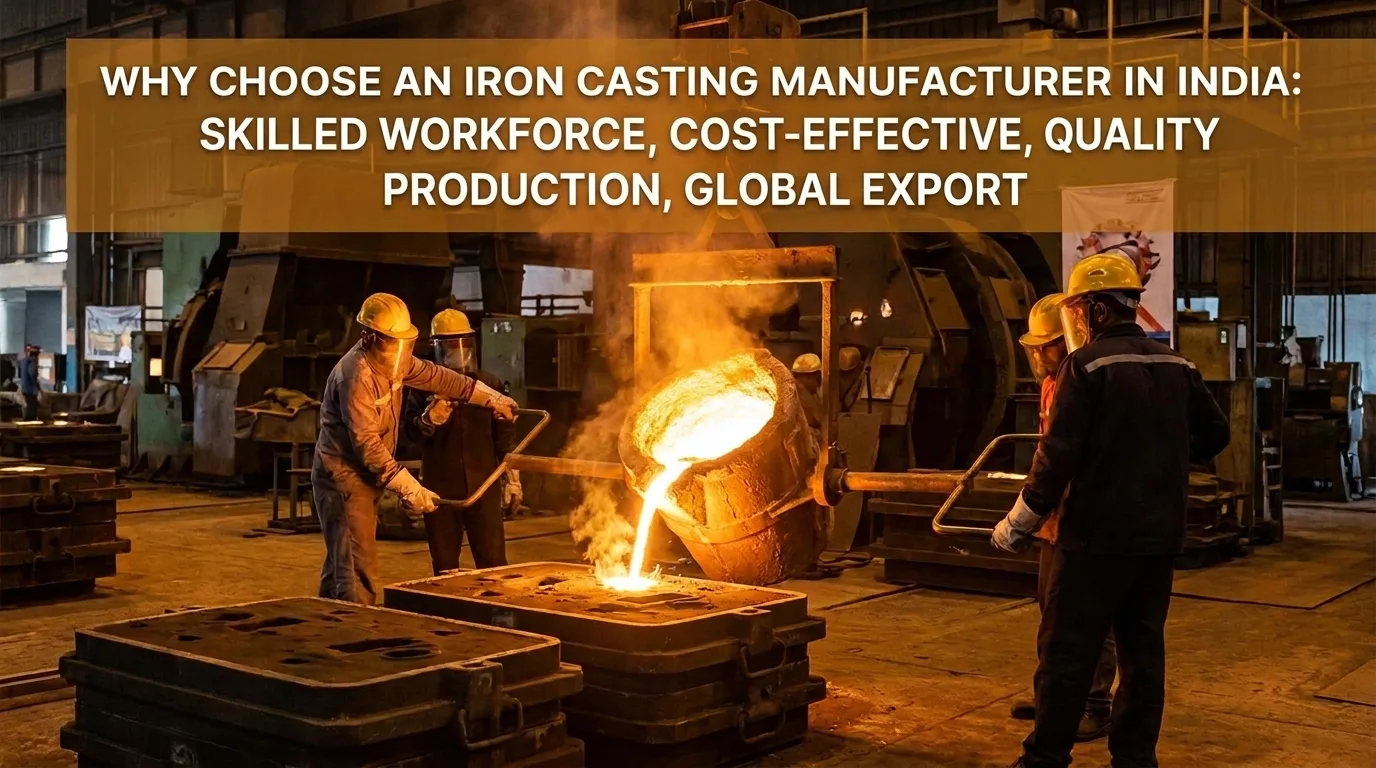
6. Pouring and Controlled Solidification
After the molten iron reaches the required pouring temperature, it is transferred into prepared molds.
A well-designed gating and riser system ensures smooth metal flow while minimizing turbulence, gas entrapment, and shrinkage defects.
During solidification, engineers monitor cooling behavior because uneven cooling may cause:
- Shrinkage cavities
- Hot tears
- Internal stresses
- Dimensional distortion
Controlling the cooling rate helps achieve a uniform microstructure and improves the casting’s overall mechanical performance.
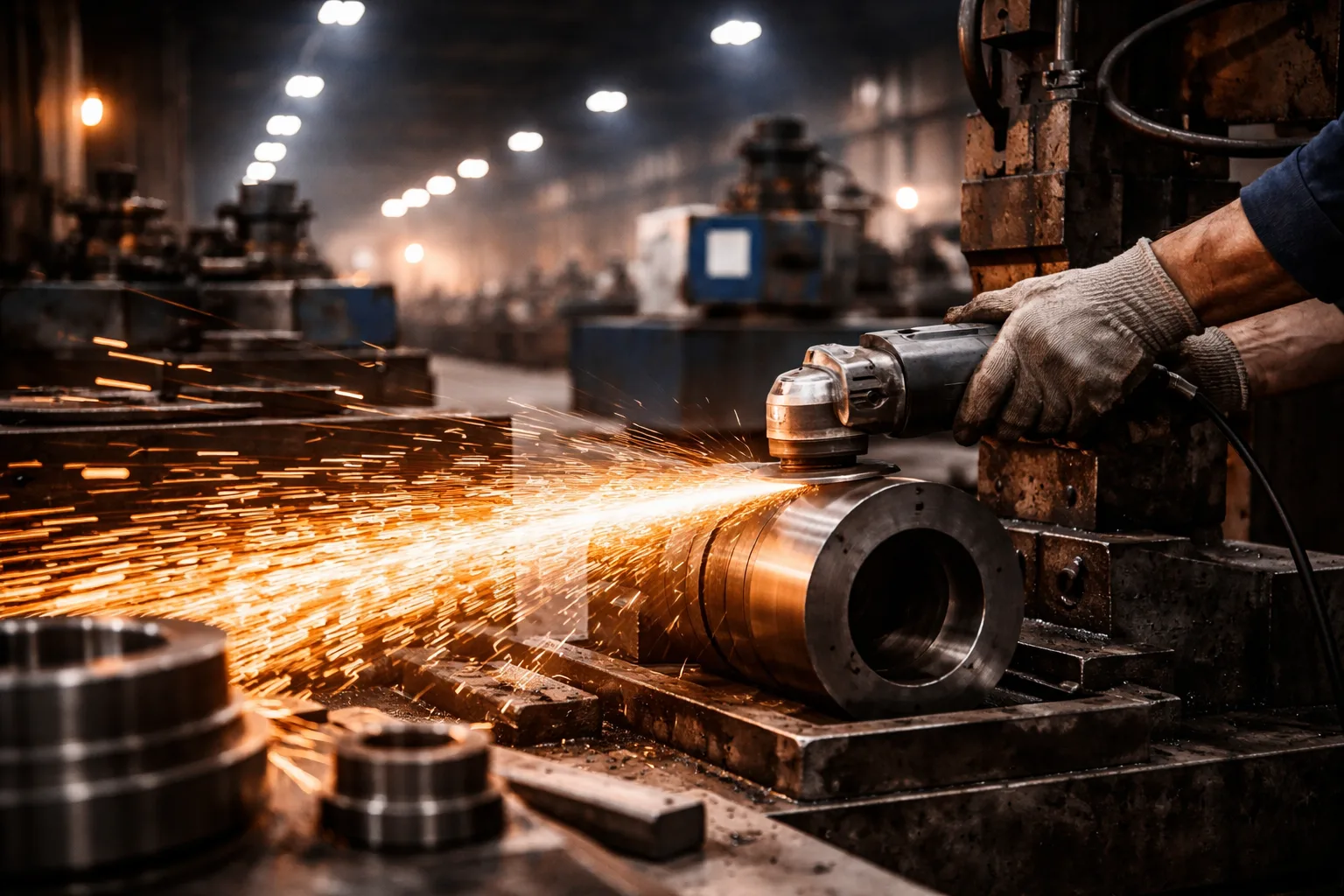
7. Fettling and Surface Cleaning
Once the casting has cooled, it is removed from the mold and enters the fettling stage.
This includes:
- Removing runners and gates
- Grinding excess material
- Shot blasting
- Surface cleaning
- Edge finishing
Proper fettling not only improves appearance but also prepares the component for machining and inspection.
8. Precision CNC Machining
Many industrial customers require fully machined castings rather than rough cast components.
Modern CNC machining centers produce:
- Tight dimensional tolerances
- Precision holes
- Flat mounting surfaces
- Accurate threads
- Assembly-ready parts
Precision machining reduces installation time while ensuring interchangeability between production batches.
9. Quality Inspection and Testing
A reliable ductile iron foundry never relies on visual inspection alone. Every production batch should undergo quality verification to ensure compliance with customer specifications.
Typical inspection methods include:
- Spectrometer chemical analysis
- Tensile strength testing
- Hardness testing
- Microstructure evaluation
- Dimensional inspection
- Surface defect inspection
- Coordinate Measuring Machine (CMM) verification where required
Some industries may also require non-destructive testing such as ultrasonic or magnetic particle inspection for safety-critical components.
These inspection procedures ensure that every casting delivered meets the required quality and performance standards.
Mechanical Properties of SG / Ductile Iron Castings
One of the primary reasons industries choose SG / Ductile Iron Castings is their excellent combination of strength, ductility, wear resistance, and machinability.
While exact values vary depending on the material grade and heat treatment, the following table provides a general comparison.
| Property | Typical Value |
|---|---|
| Density | 7.0 to 7.3 g/cm³ |
| Tensile Strength | 400 to 700+ MPa |
| Yield Strength | 250 to 500 MPa |
| Elongation | 2% to 18% |
| Hardness | 130 to 300 HB |
| Impact Resistance | High |
| Fatigue Strength | Excellent |
| Machinability | Very Good |
These mechanical properties allow engineers to design lighter and stronger components while maintaining long service life under demanding operating conditions.
Common SG Iron Grades and International Standards
To ensure consistent material performance worldwide, SG / Ductile Iron Castings are produced according to internationally recognized standards.
ASTM A536
Widely used in North America, ASTM A536 classifies ductile iron based on tensile strength, yield strength, and elongation.
Popular grades include:
- 60-40-18
- 65-45-12
- 80-55-06
- 100-70-03
ISO 1083
ISO 1083 is an international standard commonly followed across Europe and many global manufacturing industries.
EN-GJS Grades
European standards classify ductile iron using EN-GJS designations such as:
- EN-GJS-400-15
- EN-GJS-500-7
- EN-GJS-600-3
- EN-GJS-700-2
Each grade is selected according to the required balance of strength, hardness, and ductility.
Working with an experienced manufacturer helps ensure the correct grade is selected for the intended application.
SG Iron vs Grey Iron
Although both materials belong to the cast iron family, their mechanical behavior differs significantly.
| Property | SG / Ductile Iron | Grey Cast Iron |
|---|---|---|
| Graphite Shape | Spherical Nodules | Flakes |
| Tensile Strength | High | Moderate |
| Ductility | Excellent | Very Low |
| Impact Resistance | High | Low |
| Fatigue Resistance | Excellent | Moderate |
| Pressure Applications | Excellent | Limited |
| Machinability | Very Good | Excellent |
| Structural Reliability | Excellent | Moderate |
Grey iron remains suitable for applications requiring vibration damping and compressive strength. However, for components subjected to repeated loading, pressure, or impact, SG / Ductile Iron Castings offer significantly better long-term performance.
Industrial Applications of SG / Ductile Iron Castings
Because of their versatility, SG / Ductile Iron Castings are used across numerous industries.
Agriculture
Modern tractors and agricultural machinery depend on ductile iron for components such as:
- Cylinder heads
- Gear housings
- Differential housings
- Hydraulic lift components
- Transmission cases
Automotive
The automotive industry uses ductile iron for:
- Steering knuckles
- Suspension brackets
- Brake components
- Differential carriers
- Engine mounts
Construction Equipment
Heavy construction machinery requires durable castings capable of withstanding harsh environments and continuous loading.
Typical applications include:
- Excavator components
- Loader housings
- Crane parts
- Hydraulic systems
Pumps and Valves
Pump casings, valve bodies, impellers, and pressure-containing components benefit from ductile iron’s strength, machinability, and pressure resistance.
Mining and Heavy Engineering
Mining machinery operates under severe conditions where wear resistance and structural reliability are essential.
Railways and Infrastructure
Railway braking systems, suspension components, and infrastructure castings also rely on SG iron for dependable long-term performance.
OEM Ductile Iron Castings
Many industrial companies require components designed specifically for their products. OEM Ductile Iron Castings provide manufacturers with custom-engineered solutions that meet precise dimensional and performance requirements.
An experienced OEM partner typically offers:
- Drawing-based manufacturing
- CAD and 3D model interpretation
- Reverse engineering
- Prototype development
- Pattern and tooling design
- CNC machining
- Surface finishing
- Assembly-ready components
- High-volume production
OEM manufacturing helps businesses maintain consistent product quality while reducing development time and production costs.
Choosing the Right Ductile Iron Casting Manufacturer
Selecting the right manufacturing partner is as important as selecting the right material.
A professional ductile iron casting manufacturer should provide:
- Proven foundry expertise
- Modern induction melting facilities
- Process-controlled magnesium treatment
- Precision machining capability
- Quality inspection systems
- Engineering support
- Consistent production capacity
- Export experience
Manufacturers that invest in metallurgical control and process consistency are better positioned to produce reliable castings across every production batch.
Why Global Buyers Choose RAIMAC Technocast
RAIMAC Technocast manufactures precision SG / Ductile Iron Castings for OEMs, industrial equipment manufacturers, distributors, and international buyers seeking dependable quality and long-term supply.
Our capabilities include:
- Precision iron casting
- Custom ductile iron castings
- CNC machining
- OEM manufacturing
- Prototype development
- Quality-controlled production
- Export-ready packaging
- Global supply support
Every project is managed with a focus on dimensional accuracy, consistent metallurgy, and reliable delivery, helping customers build durable products while reducing sourcing risks.
Conclusion
SG / Ductile Iron Castings continue to play a critical role in modern engineering because they combine the manufacturing advantages of cast iron with mechanical properties that approach those of steel. Their exceptional strength, ductility, wear resistance, and machinability make them suitable for demanding applications across agriculture, automotive, construction, mining, fluid handling, railways, and heavy industrial equipment.
Understanding the manufacturing process, material grades, density, and application requirements allows engineers and procurement teams to select the most suitable casting solution for their projects.
Whether you require standard components or OEM Ductile Iron Castings, partnering with an experienced ductile iron casting manufacturer, ductile iron foundry, and ductile iron casting exporter ensures consistent quality, reliable performance, and dependable long-term supply.
At RAIMAC Technocast, we combine advanced foundry practices, precision machining, and rigorous quality control to manufacture high-performance ductile iron components that meet the expectations of customers across global industries.
Frequently Asked Questions
SG / Ductile Iron Castings are cast iron components in which graphite forms as spherical nodules rather than flakes. This structure significantly improves strength, ductility, fatigue resistance, and impact performance.
The typical SG cast iron density ranges from 7.0 to 7.3 g/cm³, depending on the material grade and chemical composition.
Yes. SG iron offers much higher tensile strength, better ductility, greater fatigue resistance, and improved impact performance, making it suitable for heavy-duty engineering applications.
They are widely used in agriculture, automotive, construction, mining, pumps, valves, railways, energy, and heavy industrial machinery.
Yes. Despite its high strength, SG iron provides excellent machinability and is commonly finished using CNC machining to achieve tight tolerances and assembly-ready components.
A ductile iron foundry manufactures castings through melting, treatment, molding, pouring, and finishing processes. A casting supplier may source products from multiple foundries and distribute them to customers.
OEM castings are manufactured to customer drawings or specifications, ensuring accurate dimensions, consistent quality, and compatibility with specific equipment or machinery.
Choose a manufacturer with proven foundry expertise, modern production facilities, strong quality control, engineering support, CNC machining capabilities, and experience supplying international OEM and industrial markets.