
Choosing the right automotive casting manufacturer is an important decision for OEMs, automotive component suppliers, and machinery manufacturers. The quality of a cast component can directly influence dimensional accuracy, mechanical performance, machining efficiency, assembly, and the service life of the finished vehicle or machine.
Automotive components operate under demanding conditions. Engine and drivetrain parts can experience continuous vibration, thermal cycling, impact, friction, and mechanical loads. A casting supplier therefore needs more than basic melting and molding capabilities. The manufacturer must understand material selection, casting design, metallurgy, machining, inspection, and production consistency.
Automotive iron casting remains widely used because it provides an effective combination of strength, wear resistance, machinability, vibration damping, and manufacturing efficiency. Depending on the application, manufacturers may select gray iron, ductile iron, or other engineered ferrous materials.
This guide explains how automotive castings are manufactured, which iron materials are commonly used, where they are applied, and what OEM buyers should evaluate before choosing an automotive casting manufacturer.
What Is Automotive Iron Casting?
Automotive iron casting is the process of producing automotive components by pouring molten iron into engineered molds and allowing it to solidify into the required shape.
After casting, components may undergo fettling, shot blasting, heat treatment, CNC machining, surface finishing, and dimensional inspection before they are ready for assembly.
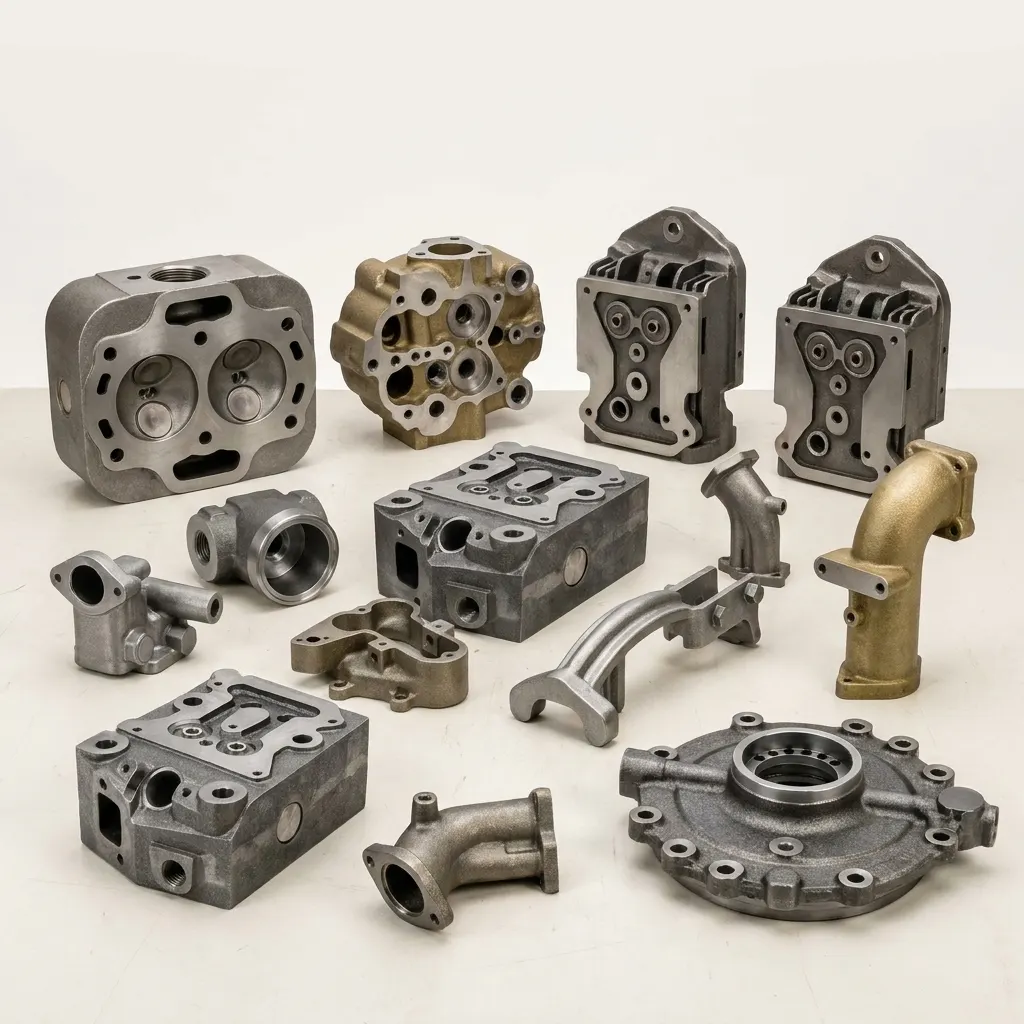
Automotive castings can include:
- Engine components
- Cylinder heads
- Engine blocks
- Gearbox housings
- Transmission cases
- Differential housings
- Brake components
- Steering components
- Suspension parts
- Flywheel housings
- Bearing housings
- Brackets and structural components
Casting is particularly valuable when components have complex geometries, internal cavities, varying wall thicknesses, or features that would be expensive to manufacture from solid material.
Why Automotive Castings Are Important
The automotive industry requires components that provide consistent performance across thousands or millions of operating cycles.
A properly engineered casting can provide several advantages.
Complex Component Geometry
Casting allows manufacturers to create shapes with internal passages, ribs, bosses, mounting points, and other features that can be difficult to produce through machining alone.
Material Efficiency
Casting produces the component close to its final geometry, reducing the amount of material that needs to be removed during machining.
High Production Efficiency
Once patterns and tooling have been developed, casting can support repeat production of large quantities of components with consistent dimensions.
Excellent Machinability
Many automotive iron castings can be efficiently machined to produce accurate bores, mounting surfaces, threads, and other critical features.
Long-Term Durability
The appropriate iron grade can provide the strength, wear resistance, fatigue performance, and thermal characteristics required by the application.
Types of Automotive Iron Castings
Material selection should always be based on the component’s actual operating requirements. Two of the most important iron families used in automotive applications are gray iron and ductile iron.
Gray Iron Automotive Castings
Gray iron contains graphite in flake form. This structure provides excellent machinability and vibration damping, making gray iron useful for various automotive and industrial components.
Typical advantages include:
- Excellent machinability
- Good vibration damping
- Good thermal conductivity
- Strong compressive performance
- Cost-effective production
Gray iron can be suitable for components where high ductility and impact resistance aren’t the primary requirements.
Ductile Iron Automotive Castings
Ductile iron, also called SG iron or spheroidal graphite iron, contains graphite in predominantly nodular form.
The nodular graphite structure provides considerably higher ductility and tensile performance than conventional gray iron.
Ductile iron can be selected for components exposed to:
- High mechanical loads
- Repeated loading
- Impact
- Bending forces
- Fatigue
- Structural stress
Common applications include differential housings, steering components, suspension parts, heavy-duty brackets, and other drivetrain or structural components.
The appropriate grade should be selected according to the design requirements and applicable material specification.
Automotive Casting Manufacturing Process
Producing reliable automotive castings requires control at every stage, from engineering design through final inspection.
1. Component Design and Engineering
The process begins with an engineering drawing, CAD model, or approved sample.
Before manufacturing begins, engineers evaluate:
- Component geometry
- Wall thickness
- Draft angles
- Machining allowance
- Shrinkage allowance
- Core requirements
- Gating system
- Riser locations
- Expected solidification behavior
Good casting design can reduce defects, improve material utilization, and simplify machining.
2. Pattern and Tooling Development
Patterns reproduce the external geometry of the component inside the mold.
For components with internal passages, cores are used to create cavities that cannot be formed by the external pattern alone.
Pattern accuracy is important because dimensional errors at this stage can carry through to the finished casting.
3. Melting
Selected raw materials are melted in an induction furnace or other suitable melting equipment.
The foundry controls important parameters such as:
- Carbon
- Silicon
- Manganese
- Sulfur
- Phosphorus
- Temperature
- Carbon equivalent
Chemical analysis helps maintain consistent metallurgy from one production batch to the next.
4. Metallurgical Treatment
For ductile iron, magnesium treatment is used to promote the formation of spheroidal graphite.
Inoculation is also used to influence graphite formation and solidification behavior.
These metallurgical processes are particularly important because the final microstructure has a direct relationship with the mechanical properties of the casting.
5. Molding and Pouring
Molten metal is poured into prepared molds through a designed gating system.
The gating and risering system must allow the metal to fill the mold effectively while providing appropriate feeding during solidification.
Poor metal flow or inadequate feeding can contribute to defects such as:
- Misruns
- Cold shuts
- Gas porosity
- Shrinkage cavities
- Inclusions
6. Cooling and Shakeout
After pouring, the casting is allowed to solidify under controlled conditions.
Once sufficiently cooled, the casting is removed from the mold. Gates, runners, risers, and excess material are then removed during fettling.
7: Machining Automotive Iron Castings
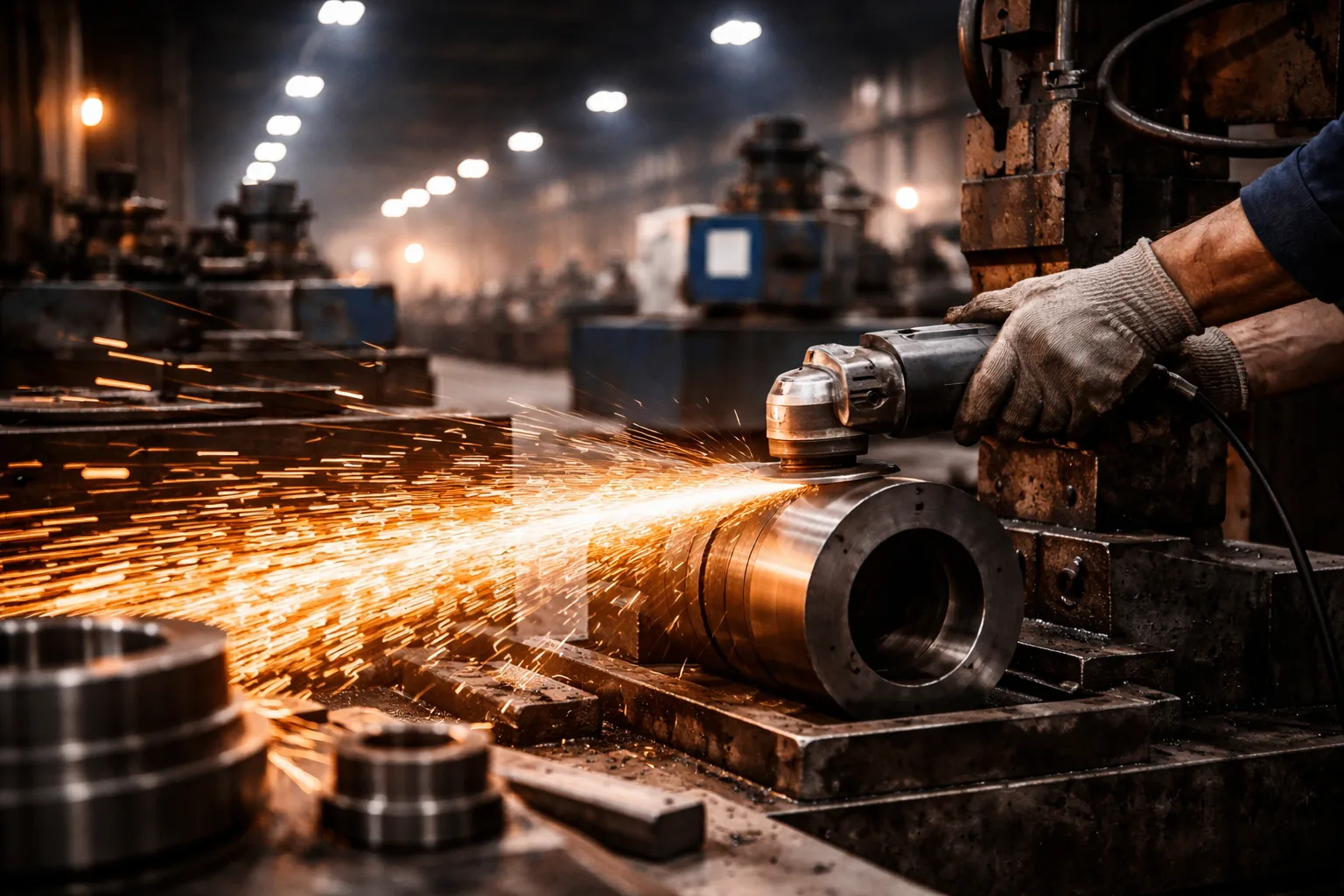
Raw castings frequently require precision machining before they can be assembled into an automotive system.
Depending on the component, machining may include:
- CNC turning
- CNC milling
- Drilling
- Boring
- Threading
- Grinding
- Surface finishing
Critical features such as bearing bores, cylinder surfaces, mounting faces, and alignment points require accurate dimensional control.
For OEM production, maintaining consistent machining tolerances across large production volumes is particularly important because components must remain interchangeable during assembly.
Quality Control for Automotive Castings
A reliable automotive casting manufacturer should have quality control procedures covering raw materials, casting production, machining, and final inspection.
Typical checks may include:
Chemical Analysis
Spectrometer testing can verify the composition of each production heat.
Mechanical Testing
Depending on the specified material, testing may include:
- Tensile strength
- Yield strength
- Elongation
- Hardness
Dimensional Inspection
Precision measuring equipment and, where required, CMM inspection can verify critical dimensions against approved engineering drawings.
Metallurgical Inspection
For ductile iron, microstructure examination can help assess graphite morphology and matrix structure.
Non-Destructive Testing
Depending on the application, manufacturers may use methods such as:
- Magnetic particle testing
- Ultrasonic testing
- Dye penetrant testing
- Radiographic testing
The appropriate inspection method depends on the material, component design, service requirements, and customer specification.
Common Automotive Casting Defects
Casting defects can increase machining costs, create rejection, and potentially compromise component performance.
Common defects include:
| Defect | Possible Cause |
|---|---|
| Shrinkage | Poor feeding or riser design |
| Gas Porosity | Entrapped gas or moisture |
| Sand Inclusion | Mold erosion or poor handling |
| Cold Shut | Inadequate metal flow or temperature |
| Misrun | Insufficient mold filling |
| Hot Tear | Restrained solidification and contraction |
| Dimensional Variation | Pattern, mold, or process variation |
A competent foundry focuses on preventing defects through process engineering rather than relying only on final inspection.
OEM Automotive Castings
OEM customers often require castings manufactured according to specific drawings, CAD models, material grades, tolerances, and inspection requirements.
An experienced engine casting manufacturer or automotive casting supplier should be able to support the project through multiple stages.
These may include:
- Drawing review
- Casting design support
- Pattern development
- Prototype production
- Material selection
- Tooling
- Casting
- Heat treatment where specified
- CNC machining
- Inspection
- Production scaling
- Export packaging
For repeat OEM programs, consistency is critical. The manufacturer must reproduce the required geometry and material properties across production batches rather than simply producing individual castings that pass inspection.
How to Choose an Automotive Casting Manufacturer
Price is important, but it shouldn’t be the only factor when buying automotive castings.
Evaluate a supplier based on:
Foundry Capability
Does the manufacturer have suitable melting, molding, treatment, and finishing capabilities for your component?
Material Expertise
Can the supplier produce the required gray iron, SG iron, or other specified material grade consistently?
Engineering Support
Can the manufacturer review your design and identify potential casting or machining problems before production?
Machining Capability
Does the supplier offer precision machining for critical dimensions?
Quality Control
Can the manufacturer provide material testing, dimensional inspection, traceability, and other documentation required by your specification?
Production Capacity
Can the supplier support both initial production and increasing volumes without compromising quality?
OEM Experience
Does the manufacturer understand drawing-controlled production, tooling management, inspection plans, and repeat-order requirements?
Automotive Iron Casting Applications
Automotive iron castings are used across numerous vehicle systems.
Engine Systems
Applications can include:
- Engine blocks
- Cylinder heads
- Flywheel housings
- Brackets
- Covers
Transmission and Drivetrain
Iron castings can be used for:
- Transmission housings
- Gearbox housings
- Differential cases
- Bearing housings
Chassis and Suspension
Ductile iron is suitable for selected structural and load-bearing components where high strength and fatigue resistance are required.
Brake and Steering Systems
Certain brake and steering components can benefit from the strength, wear resistance, and dimensional stability offered by suitable iron grades.
Why Choose RAIMAC Technocast for Automotive Castings?
RAIMAC Technocast provides custom iron casting solutions for OEM and industrial component requirements.
Its product capabilities can support projects involving:
- Automotive iron castings
- SG / ductile iron castings
- Industrial iron components
- OEM castings
- Precision-machined castings
- Custom engineering components
For an automotive casting project, the material, casting process, machining requirements, inspection plan, and production volume should be established before manufacturing begins.
The objective is not simply to produce a metal component. It is to produce a component that consistently meets the engineering requirements of the final assembly.
Frequently Asked Questions
Automotive iron casting is the process of manufacturing vehicle and automotive machinery components by pouring molten iron into engineered molds and then finishing the castings through fettling, machining, inspection, and other required processes.
Automotive castings can be used in engines, transmissions, differentials, chassis systems, braking systems, steering components, housings, brackets, and other vehicle assemblies.
Gray iron contains graphite flakes and is known for excellent machinability and vibration damping. Ductile iron contains predominantly spherical graphite nodules and generally provides higher tensile strength, ductility, and impact resistance.
Look for a supplier with strong metallurgical expertise, suitable casting processes, engineering support, machining capability, quality inspection, production capacity, and experience with OEM requirements.
Conclusion
Choosing the right automotive casting manufacturer is a technical sourcing decision, not simply a purchasing decision. The manufacturer must be capable of controlling metallurgy, casting geometry, solidification, machining, and inspection throughout the production process.
For many applications, automotive iron casting provides an excellent combination of strength, durability, machinability, vibration damping, and cost efficiency. Gray iron can be appropriate for selected components, while SG or ductile iron provides greater mechanical performance where loading, impact, and fatigue resistance are important.
For OEMs sourcing automotive castings, the best supplier is one that can support the complete manufacturing cycle, from pattern and tooling development to casting, machining, inspection, and repeat production.
RAIMAC Technocast can support custom iron casting requirements for automotive and industrial applications, subject to the component design, material specification, production requirements, and project scope.